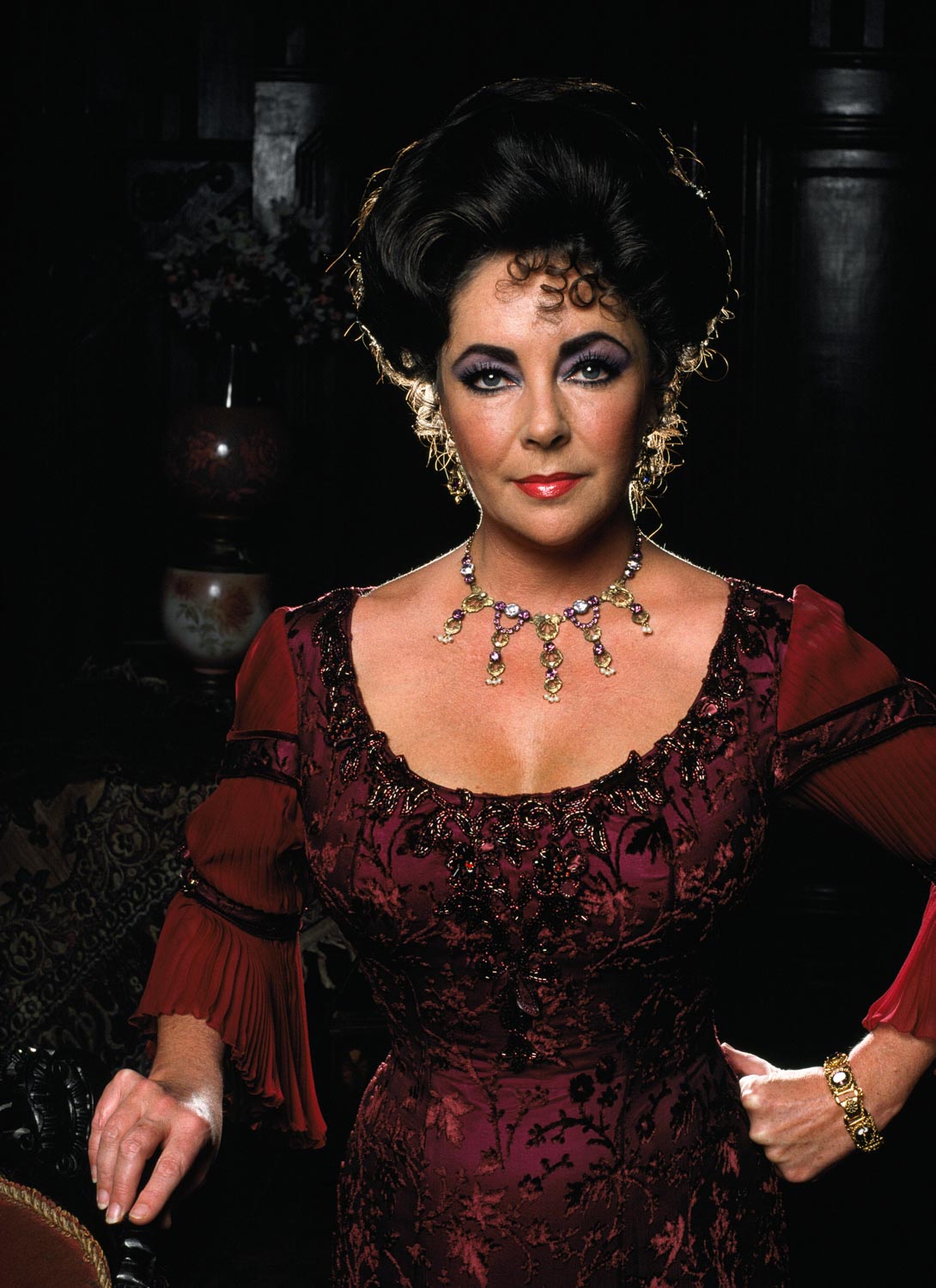
How Elizabeth Taylor’s Star Turn In “The Little Foxes” Helped The Actress Reclaim Herself
Image: Getty / John Bryson
Elizabeth Taylor’s return to the stage in The Little Foxes marks one of the most revealing chapters of her life and career. Less celebrated than her cinematic triumphs, the performance was nonetheless pivotal, quietly signaling a renewed ambition, a recommitment to discipline, and an evolving understanding of herself as an artist.
When Elizabeth joined the 1981 Broadway revival of Lillian Hellman’s 1939 drama, she was already a legend. Five Academy Award nominations and two wins over decades of global fame, compounded by relentless tabloid scrutiny, had transformed her into an icon, often at the expense of being seen simply as a beautiful movie star who had been married too many times. For both critics and fans, Broadway seemed an unlikely arena for her return to serious work. For Elizabeth, however, the decision was not about conquest but about authorship. It was a turning inward, followed by a deliberate step back into the public eye, on her own terms.
By the late 1970’s, Elizabeth had largely removed herself from the life she had long commanded. Her marriage to Senator John Warner ushered her into a different form of visibility, one shaped by politics rather than performance. She campaigned at his side, adjusted to the rituals of Washington, and for a time, placed her larger-than-life identity aside to inhabit the role of a senator’s wife. For a woman whose main focus had been self-determination since childhood, the shift was seismic.
It was from this moment that she realized the critical importance for a new kind of challenge. When the opportunity arose to play Regina Giddens, one of the most formidable roles in American theater, Elizabeth recognized it as the test she needed. Regina is a woman constrained by society yet ferociously unwilling to accept diminishment. She seeks money not merely for comfort, but for autonomy, for the right to stand with profound independence in the world. Elizabeth understood that desire intimately. Her Regina was not a caricature of cruelty, but a woman honed by denial and circumstance. It was a performance grounded in lived experience.
Broadway, in many ways, was the most unforgiving platform Elizabeth could have chosen, one that required daily discipline far more intense than making a film. There were no retakes, no flattering camera angles, no cinematic myth to shield her. Night after night, she had to stand alone onstage, exposed. But that was precisely the point. If she was to reclaim her power, it would be through risk and vulnerability.
The revival opened at the Martin Beck Theatre, now the Al Hirschfeld Theatre, under the direction of Austin Pendleton and ran for 119 performances, a respectable run by Broadway standards. Elizabeth’s presence was the undeniable commercial engine, with advance sales driven by audiences eager to see her live.
Critical response was mixed, but crucially, it was serious. Reviewers remarked on her magnetism and authority, while some scrutinized her technique, her vocal projection, or her stamina. Others praised the intelligence of her interpretation, particularly her ability to render Regina as more than just a monster. Across the reviews, one thing was clear. Elizabeth Taylor had memorized, rehearsed, and committed to the role in ways that confounded skeptics. She was no longer being discussed as a figure of scandal or nostalgia; she was being assessed as an actress doing demanding work. A Tony nomination for the role later further validated her success.
In retrospect, Elizabeth’s Broadway run stands as a turning point in her life. The Little Foxes was her declaration that she was finished being ornamental to other people’s power. On that stage, under those lights, she reclaimed her authority, not as a senator’s wife, but as a woman who still had something urgent to say, on her own terms.