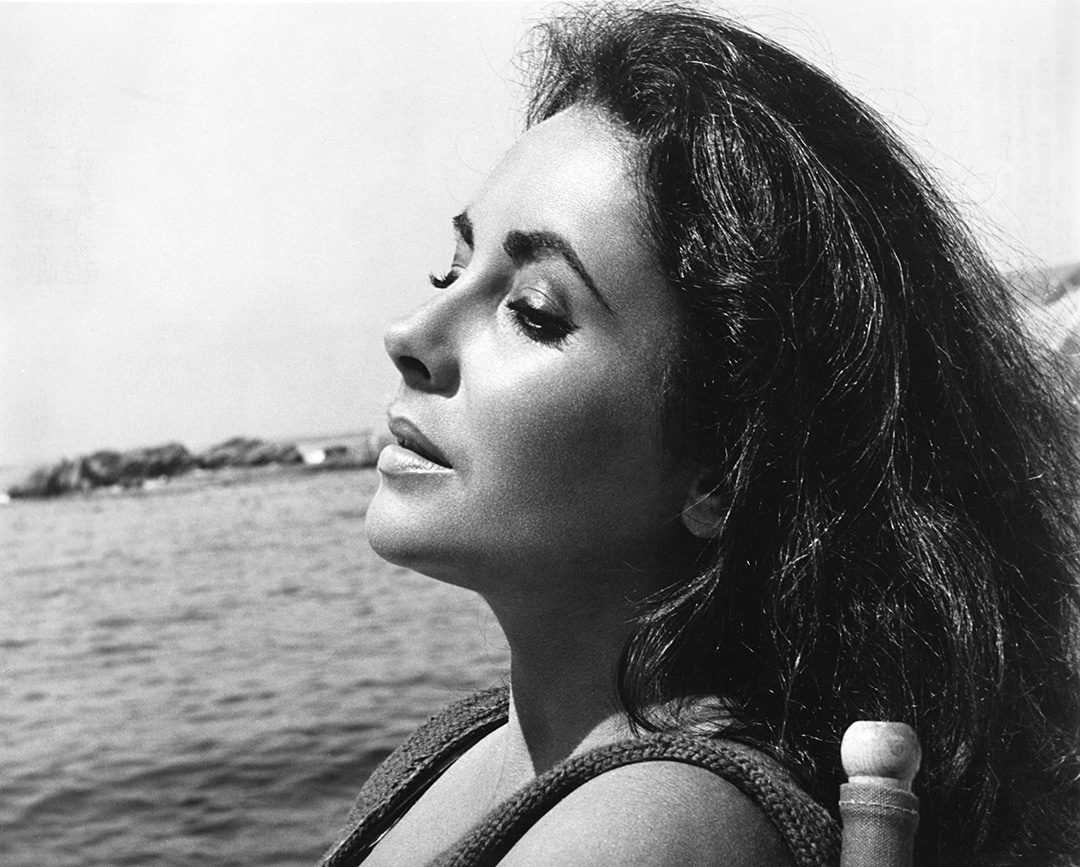
The Statue of Elizabeth Taylor, Carved for The Sandpiper
Image: mptvimages.com
When production began on The Sandpiper in 1964, MGM commissioned something unusual for the film: a life-size sculpture of its star, Elizabeth Taylor, carved from the trunk of a redwood tree. The film was set against the cliffs and coastline of Big Sur, and the statue — depicting Elizabeth's character, Laura Reynolds, a free-spirited artist living alone with her young son in a beach house on the California coast — was to appear in the film itself, as a work created by a fellow artist who admires her. On top of the novelty of the task, it also meant a quick turnaround — they needed it completed in just under a month.
For the commission, MGM turned to Edmund Kara, a sculptor who had made Big Sur his home since 1962 and worked almost exclusively with wood found or grown in the surrounding landscape. Kara was famously reclusive and rarely exhibited his work, which made the commission a notable exception within his body of work. Elizabeth never sat for Edmund directly; rather, he worked from a plaster life-cast of her face to capture her likeness. For the body, he enlisted the help of his friend Stella Brooks, a jazz singer whom he felt shared a similar physical presence to Elizabeth. The entire process was photographed by Walter Chappel, documenting Kara as he carved, tools in hand, the form of Elizabeth emerging gradually from a trunk that had started at 2,200 pounds. The finished sculpture weighed 712 pounds and was insured by Lloyd's of London for $100,000 during production.
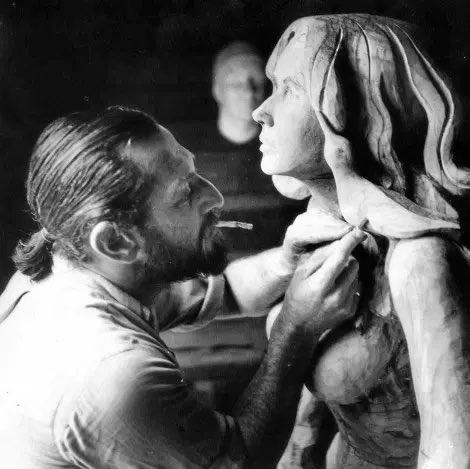
Image: Walter Chappel
Though the production was filmed primarily on location in Big Sur, interiors were shot in Paris, which meant that getting the statue to its destination was an adventure of its own. Producer Martin Ransohoff had booked it a first-class stateroom aboard the Queen Mary with a Burns detective guard to accompany it, but with shipping code prohibiting cargo of that weight in first-class accommodations — regardless of who it depicted — the piece made the Atlantic crossing in the cargo hold. It arrived in Paris, where it was unveiled with much fanfare at a gallery by Richard Burton himself; The Sandpiper being the third of eleven films Elizabeth and Burton would make together, their real-life romance already a sensation watched by the entire world. A five-minute promotional short about the work, A Statue for The Sandpiper, was released alongside the film and has since become its own small artifact, a record of the making of this unique piece.
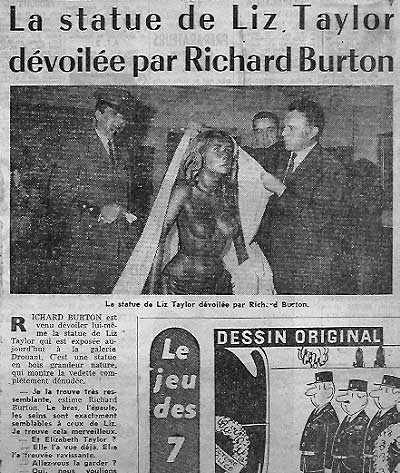
Where the sculpture is today remains unknown, adding another layer of mystery to the story. The statue is a striking footnote to one of the most famous on-screen pairings in Hollywood history, and a testament to the kind of mythmaking that surrounded Elizabeth at the height of her career. Even a film prop, in Elizabeth's orbit, had a tendency to become something so much more than the sum of its parts.