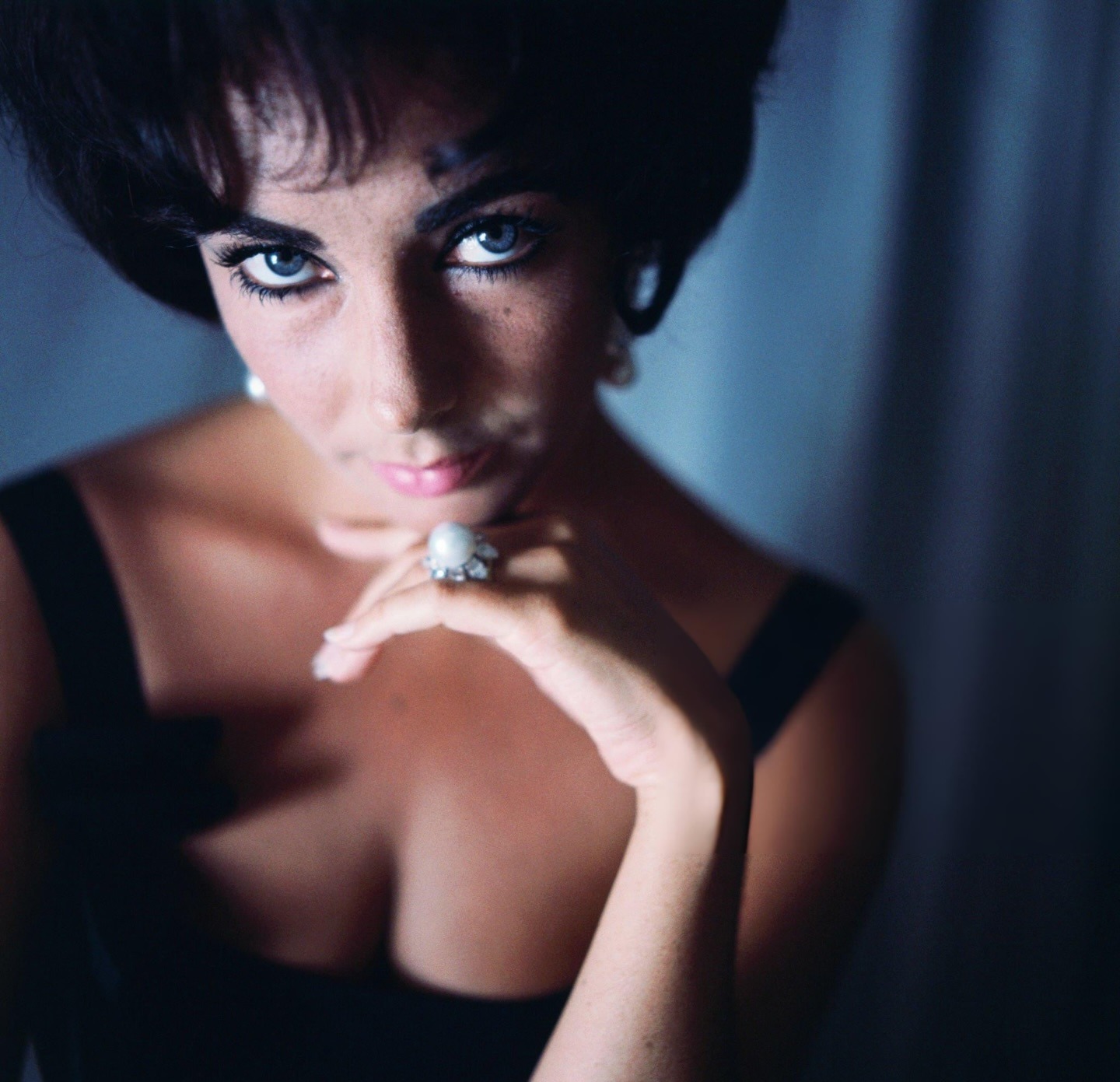
The Enduring Allure of Elizabeth Taylor’s Violet Eyes
Image: Getty/Douglas Kirkland
Years after her death, Elizabeth Taylor's violet eyes continue to fascinate and find new footing in pop culture. When Taylor Swift named the second track of her album The Life of a Showgirl after the actress and wrote "I'd cry my eyes violet / Elizabeth Taylor," she introduced an entire new generation to Elizabeth and her iconic eyes. For Record Store Day 2026, Taylor pressed the single onto purple-and-blue glitter vinyl in tribute, creating a physical object designed to hold the same elusive quality that made Elizabeth’s eyes hard to define and impossible to forget.

Elizabeth's eyes were exceptionally pigmented, with blue and green hues so deep that in certain conditions they appeared violet. She also had a genetic mutation that caused her to grow a double row of eyelashes. As the story goes, when she arrived on her first film set as a child, the director reportedly asked the makeup department to wipe off her mascara, only to realize she wasn't wearing any. That dense double fringe created a visual frame that enhanced the saturation of her irises even further, giving her gaze a natural drama that no cosmetics could have replicated.
When Elizabeth stepped in front of the bright lights and cameras of Hollywood, the depth of her eye color did the rest. The era's Technicolor and CinemaScope film stocks rendered blues with a particular warmth, and the human eye — reading that warmth against fair skin and dark lashes — interpreted the result as violet. The sets and costumes of her biggest productions happened to reinforce the effect: surrounded by the amber sands of Cleopatra or the warm interiors of Cat on a Hot Tin Roof, a deep blue often reads purple. Off-screen, accounts of her eye color were more divided — but by the time most people encountered Elizabeth Taylor in person, they had already formed an impression from the screen. From the time she was a child at MGM, people who met Elizabeth in person have continued to swear that her eyes were violet, but that was never Elizabeth’s claim, though she understood what that idea meant to people.
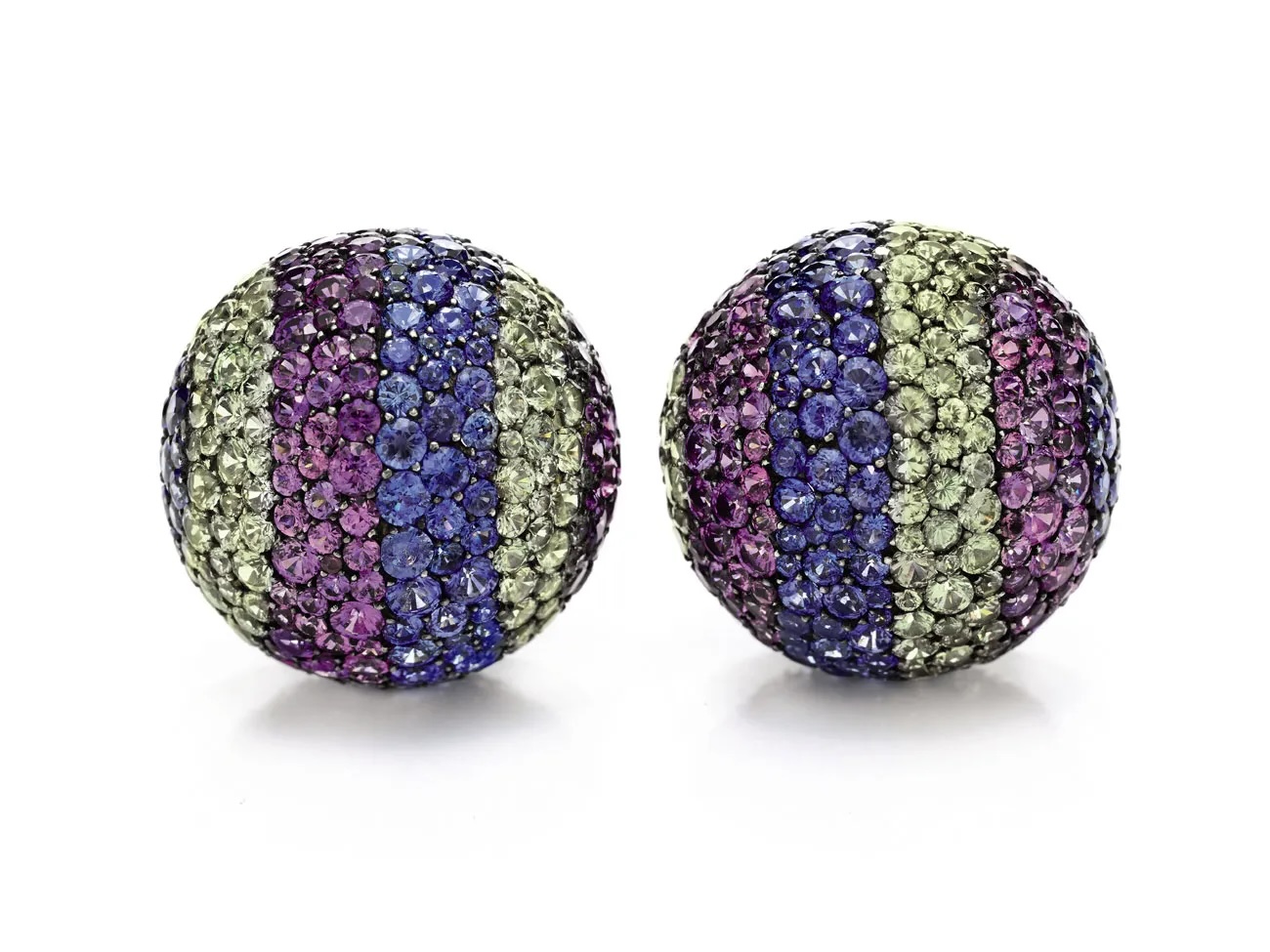
In 2001 she commissioned a pair of sapphire ball ear clips from JAR — Joel Arthur Rosenthal, the reclusive Parisian jeweler who works by appointment only from the Place Vendôme. When the two first met, Elizabeth was wearing a turquoise necklace and earrings, which Joel told her were the wrong color for her eyes —the stone was too bright, and didn’t have the depth and complexity to bring out all the colors naturally reflected in her irises. To prove his point he said he would design a pair of earrings that would show them off perfectly. The resulting pair did just that, featuring sapphires in shifting shades of blue, green, and purple that change with the light, the angle, and whatever she was wearing. Photographer Bruce Weber captured a tender moment between Elizabeth and her beloved great-grandson Finn Wilding in which she is wearing the JAR earrings; his portrait of her was ultimately selected to appear with her dedication at the beginning of her autobiographical book "My Love Affair with Jewelry."
Her eyes were memorialized in a fragrance as well. In 2010 she launched "Violet Eyes," inspired by her most unforgettable feature. Elizabeth initially felt reluctant to promote a scent with that name, for fear of appearing conceited. She was partial to "Catch Me" as a fun alternative — a shortened version of “Catch me...if you can,” a nod to her being the original influencer, for her success in pioneering modern celebrity branding. At an impasse, she went to her fans in the early days of Twitter with a poll, asking for their help to choose, and "Violet Eyes" won by a long shot.
Ultimately what makes Elizabeth’s eyes such an enduring point of interest is that they were truly authentic to her inimitable presence, not a constructed phenomenon or studio invention. They were the result of rare genetics, remarkable pigmentation, and the particular visual language of a golden age of filmmaking. The technology of the time simply reflected what was there, and what was there happened to be extraordinary. Today, the allure of Elizabeth’s violet eyes remains as alive as ever.